Blog
The Difference Between Real Silver Zari and Imitation Zari
Zari is one of the most distinctive details found in traditional Indian sarees. Its metallic sheen can transform a simple handloom into an elegant festive or bridal piece. However, not all zari is made from the same materials.
When shopping for a premium saree, understanding the difference between real silver zari vs imitation zari can help you evaluate its craftsmanship, appearance, price, and long-term value.
Real silver zari traditionally involves silver as part of its construction, while imitation zari uses less expensive materials designed to recreate a similar metallic appearance. Both can produce beautiful sarees, but they differ considerably in composition, cost, durability, maintenance, and overall value.
If you are considering a saree with zari work, knowing what you are actually purchasing is important.
What Is Zari?
Zari is a metallic thread traditionally used to create decorative patterns on textiles.
It can be woven into:
- Saree borders
- Pallus
- Motifs
- Traditional textiles
- Buttas
- Blouses
- Dupattas
Historically, precious metals such as gold and silver were used in high-quality zari. Modern zari can also be manufactured using various metal-coated or synthetic materials to provide a similar appearance at a more accessible price.
The type of zari used can significantly influence the final appearance and price of a saree.
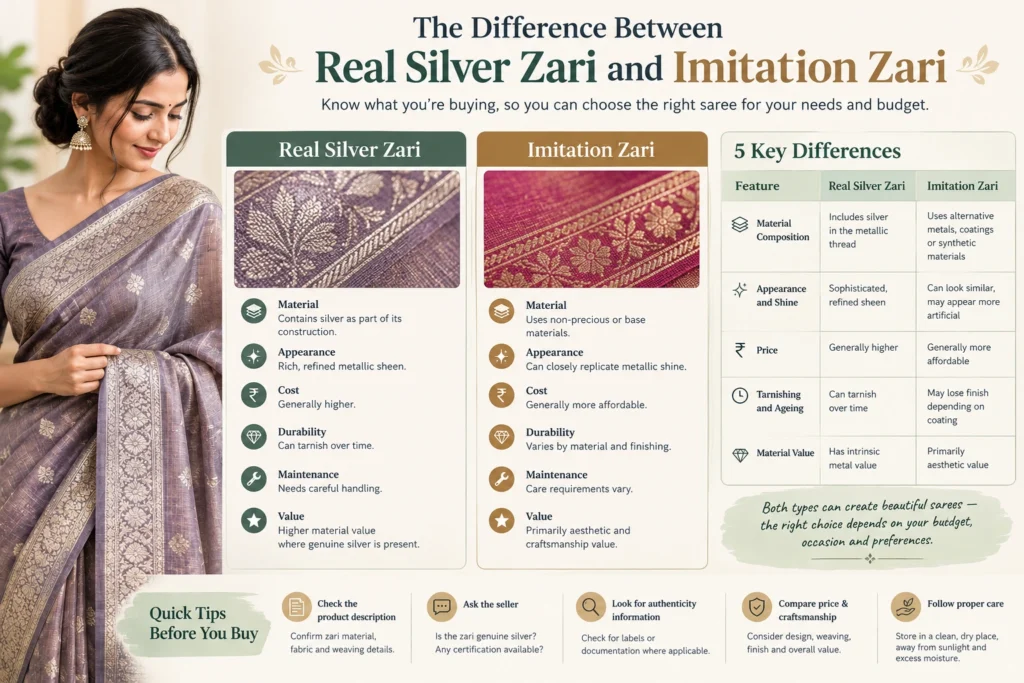
| Feature | Real Silver Zari | Imitation Zari |
|---|---|---|
| Material | Contains silver as part of its construction | Uses non-precious or base materials |
| Appearance | Rich, refined metallic sheen | Can closely replicate metallic shine |
| Cost | Generally higher | Generally more affordable |
| Craftsmanship | Often associated with premium traditional weaving | Can also be used in detailed designs |
| Durability | Depends on construction and care | Varies by material and finishing |
| Tarnishing | Silver can naturally tarnish over time | May lose finish depending on coating |
| Maintenance | Requires careful handling | Care requirements vary |
| Value | Higher material value where genuine silver is present | Primarily aesthetic and craftsmanship value |
The exact characteristics can vary depending on how the zari is manufactured and woven.
What Is Real Silver Zari?
Real silver zari is traditionally made using silver as part of the metallic thread.
The silver is processed into a form suitable for weaving and may be wrapped around a textile core. The resulting thread can then be incorporated into the saree’s borders, motifs, or pallu.
Because silver is a precious metal, genuine silver zari can add considerable material value to a saree.
However, it is important to understand that the presence of silver does not necessarily mean the entire saree is made with solid silver threads. Zari construction can involve different combinations of metal and textile components.
Characteristics of Real Silver Zari
Real silver zari may offer:
- A distinctive metallic appearance
- A softer, more refined shine
- Traditional craftsmanship
- Greater material value
- Potential for natural tarnishing
- Higher production costs
Its appearance can also change over time depending on exposure to air, moisture, handling, and storage conditions.
What Is Imitation Zari?
Imitation zari is designed to reproduce the appearance of traditional metallic zari without using the same amount or type of precious metal.
It may use materials such as base metals, metallic coatings, or other manufactured fibres depending on the product.
The objective is primarily to achieve the decorative appearance of zari at a lower cost.
Modern imitation zari can look remarkably similar to genuine metallic zari, particularly when viewed from a distance.
Why Is Imitation Zari Used?
Imitation zari allows manufacturers and weavers to create decorative sarees at different price points.
It can be useful when:
- A customer wants a metallic appearance at a lower price.
- The saree is intended for occasional use.
- The design requires extensive zari work.
- The product is positioned as a more accessible alternative
- The manufacturer wants greater flexibility in material selection.
Using imitation zari does not automatically mean that a saree is poorly made. The quality of the weaving, fabric, design, and finishing still matters.
The key is that the material should be accurately represented to the customer.
5 Key Differences Between Real Silver Zari and Imitation Zari
1. Material Composition
The most important difference between real silver zari vs imitation zari is the material used.
Real silver zari incorporates silver into the metallic component, whereas imitation zari generally uses less expensive alternatives.
When purchasing an expensive saree, always check the product description or ask the seller exactly what type of zari has been used.
2. Appearance and Shine
Real silver zari can have a sophisticated metallic sheen that may appear less artificial than some imitation materials.
However, modern imitation zari can also have a highly polished and attractive appearance.
Therefore, visual inspection alone is not always enough to determine whether zari is genuine.
A photograph can make the distinction even more difficult, particularly when purchasing online.
3. Price
One of the biggest differences is cost.
Because genuine silver is a precious metal, sarees incorporating real silver zari can be more expensive.
The final price, however, also depends on:
- Fabric
- Saree length
- Weaving technique
- Amount of zari
- Design complexity
- Artisan craftsmanship
- Brand or seller
- Finishing
- Overall construction
Therefore, a high price by itself does not prove that a saree contains real silver zari.
4. Tarnishing and Ageing
Silver naturally reacts with elements in its environment and can develop tarnish over time.
This means genuine silver zari may gradually lose some of its brightness if it is not stored properly.
Imitation zari can also change appearance, particularly if its metallic coating wears down. The way it ages depends heavily on the material and manufacturing process.
Proper storage is therefore important for both types.
5. Material Value
Real silver zari can have material value because silver itself is a precious metal.
Imitation zari generally does not have the same intrinsic metal value.
However, the overall value of a saree should never be determined by zari alone.
A handwoven saree with intricate craftsmanship, premium silk, and a traditional weaving technique can have significant artistic and cultural value regardless of whether its decorative thread contains precious metal.
How to Identify Real Silver Zari?
A common question from saree buyers is how to identify real zari.
Unfortunately, there is no single reliable visual test that works for every zari product.
Start With the Product Description
When purchasing online, look for specific information about:
- Zari material
- Type of metallic thread
- Fabric composition
- Weaving technique
- Origin
- Authenticity documentation, where applicable
Be cautious of vague descriptions such as “premium zari” if the material itself is not explained.
Ask the Seller
For a high-value saree, ask the seller directly:
“Is the zari made with genuine silver?”
You can also ask:
“What is the composition of the zari?”
“Is there any documentation confirming the zari material?”
“How should the zari be stored and maintained?”
Clear answers can help you understand what you are buying.
Don't Depend on Home Tests
Various traditional methods are sometimes suggested for identifying precious-metal zari.
However, home tests can be unreliable and may potentially damage a delicate saree.
For expensive purchases, documentation, seller transparency, and professional verification are more appropriate than attempting potentially damaging tests yourself.
- Detailed product descriptions
- Clear fabric specifications
- Transparent return policies
- Thread quality
- Colour consistency
- Fabric finishing
- Overall drape
When purchasing a saree advertised as handloom, check whether the seller provides relevant certification or product documentation where applicable.
Ask Questions Before Buying
If product information is unclear, ask the seller directly.
Useful questions include:
- What is the fabric composition?
- Is this saree handwoven?
- Where was it woven?
- Authentic product photographs
- Information about the weaving tradition
- Customer reviews
- Business contact details
- Clear care instructions
A seller that provides detailed information about the saree makes it easier for customers to understand what they are purchasing.
5 Key Differences Between Real Silver Zari and Imitation Zari
1. Material Composition
The most important difference between real silver zari vs imitation zari is the material used.
Real silver zari incorporates silver into the metallic component, whereas imitation zari generally uses less expensive alternatives.
When purchasing an expensive saree, always check the product description or ask the seller exactly what type of zari has been used.
2. Appearance and Shine
Real silver zari can have a sophisticated metallic sheen that may appear less artificial than some imitation materials.
However, modern imitation zari can also have a highly polished and attractive appearance.
Therefore, visual inspection alone is not always enough to determine whether zari is genuine.
A photograph can make the distinction even more difficult, particularly when purchasing online.
3. Price
One of the biggest differences is cost.
Because genuine silver is a precious metal, sarees incorporating real silver zari can be more expensive.
The final price, however, also depends on:
- Fabric
- Saree length
- Weaving technique
- Amount of zari
- Design complexity
- Artisan craftsmanship
- Brand or seller
- Finishing
- Overall construction
Therefore, a high price by itself does not prove that a saree contains real silver zari.
4. Tarnishing and Ageing
Silver naturally reacts with elements in its environment and can develop tarnish over time.
This means genuine silver zari may gradually lose some of its brightness if it is not stored properly.
Imitation zari can also change appearance, particularly if its metallic coating wears down. The way it ages depends heavily on the material and manufacturing process.
Proper storage is therefore important for both types.
5. Material Value
Real silver zari can have material value because silver itself is a precious metal.
Imitation zari generally does not have the same intrinsic metal value.
However, the overall value of a saree should never be determined by zari alone.
A handwoven saree with intricate craftsmanship, premium silk, and a traditional weaving technique can have significant artistic and cultural value regardless of whether its decorative thread contains precious metal.
How to Identify Real Silver Zari?
A common question from saree buyers is how to identify real zari.
Unfortunately, there is no single reliable visual test that works for every zari product.
Start With the Product Description
When purchasing online, look for specific information about:
- Zari material
- Type of metallic thread
- Fabric composition
- Weaving technique
- Origin
- Authenticity documentation, where applicable
Be cautious of vague descriptions such as “premium zari” if the material itself is not explained.
Ask the Seller
For a high-value saree, ask the seller directly:
“Is the zari made with genuine silver?”
You can also ask:
“What is the composition of the zari?”
“Is there any documentation confirming the zari material?”
“How should the zari be stored and maintained?”
Clear answers can help you understand what you are buying.
Don't Depend on Home Tests
Various traditional methods are sometimes suggested for identifying precious-metal zari.
However, home tests can be unreliable and may potentially damage a delicate saree.
For expensive purchases, documentation, seller transparency, and professional verification are more appropriate than attempting potentially damaging tests yourself.
Why Does Real Silver Zari Increase Saree Price?
When genuine silver is incorporated into zari, the material itself can contribute to the price.
But the cost of a saree with silver zari is not simply the price of silver.
Consider the entire production process.
Material Cost
Silver and premium fabrics can increase raw material costs.
Weaving Time
Intricate zari patterns can require significant additional weaving time.
Artisan Skill
Detailed borders, pallus, and motifs require considerable technical skill.
Design Complexity
A saree with extensive zari work generally requires more effort than one with a simple border.
Finishing
The final appearance depends on how carefully the saree is finished and handled.
This combination of material, craftsmanship, and labour contributes to the final price.
Real Silver Zari vs Imitation Zari: Which Should You Choose?
There is no universal answer.
The right choice depends on your budget, occasion, preferences, and expectations.
Choose Real Silver Zari If:
- You appreciate traditional premium craftsmanship.
- You are looking for a luxury saree.
- Material authenticity is important to you.
- You value the use of precious-metal zari.
- You are prepared to provide careful maintenance.
Choose Imitation Zari If:
- You want a metallic appearance at a lower price.
- You plan to wear the saree occasionally.
- Your priority is design rather than precious-metal content.
- You want more affordable festive options.
Both can create beautiful sarees when the material and craftsmanship are accurately represented.
How to Care for a Silver Zari Saree
Whether your saree contains genuine silver zari or another metallic thread, careful storage is important.
Follow these tips:
- Store the saree in a clean, dry environment.
- Protect it from excessive humidity.
- Avoid prolonged exposure to direct sunlight.
- Refold the saree periodically.
- Avoid storing it in damp conditions.
- Keep perfumes and cosmetic products away from the fabric.
- Follow the manufacturer's cleaning instructions.
- Consider professional cleaning for delicate sarees.
For valuable silk and zari sarees, proper storage can help preserve both the fabric and metallic detailing.
What Should You Check Before Buying a Zari Saree?
Before purchasing a silver zari saree, use this checklist:
Material
Confirm the fabric and zari composition.
Weaving
Find out whether the saree is handwoven and which weaving technique is used.
Zari Details
Ask whether the zari is genuine silver, silver-coated, or imitation.
Craftsmanship
Examine the border, pallu, motifs, and overall finishing.
Price
Compare the price with the material, craftsmanship, and amount of zari used.
Authenticity
Ask about relevant certifications or documentation where applicable.
Care
Check the recommended storage and cleaning instructions.
Seller Transparency
Choose sellers who clearly describe their products rather than relying on vague luxury terminology.
Don't Confuse Silver Zari With Silver-Look Zari
One of the most important things to understand when shopping is the difference between silver zari and zari that simply has a silver-coloured appearance.
A saree may have a bright metallic border that looks silver but does not contain actual silver.
This is not necessarily a problem if the saree is clearly described as using imitation or metallic zari.
The issue arises when customers are led to believe that a product contains precious metal when it does not.
Transparency is therefore essential when purchasing premium sarees.
Final Thoughts
Understanding real silver zari vs imitation zari can help you make a more informed saree purchase.
Real silver zari incorporates genuine silver into the metallic thread and can offer additional material value, traditional appeal, and a distinctive finish. Imitation zari uses alternative materials to achieve a similar decorative appearance at a more accessible price.
Neither option automatically determines the overall quality of a saree.
When choosing a zari saree, consider the fabric, weaving technique, craftsmanship, design, zari composition, authenticity, price, and maintenance requirements together.
Most importantly, always verify what type of zari has actually been used rather than relying solely on appearance or price.
A well-crafted saree can be beautiful whether it uses genuine silver zari or imitation zari—as long as its materials and craftsmanship are honestly represented.
Frequently Asked Questions
1. What is the difference between real silver zari and imitation zari?
Real silver zari incorporates silver into the metallic thread, while imitation zari generally uses alternative metals, coatings, or manufactured materials to create a similar appearance.
2. Is real silver zari more expensive?
Generally, yes. Genuine silver can increase material costs, although the overall saree price also depends on the fabric, weaving technique, design complexity, craftsmanship, and amount of zari.
3. Can I identify real silver zari just by looking at it?
Not reliably. Appearance can provide clues, but modern imitation zari can look very similar to genuine metallic zari. Product documentation and seller information are more dependable.
4. Does real silver zari tarnish?
Yes. Genuine silver can naturally tarnish when exposed to air and environmental conditions. Proper storage and appropriate care can help maintain its appearance.
5. Is imitation zari poor quality?
Not necessarily. Imitation zari can be attractive and durable depending on its construction and quality. It is simply different in material composition from genuine silver zari.
6. Why are silver zari sarees expensive?
The price may reflect genuine silver, premium fabric, intricate weaving, artisan skill, detailed designs, and the amount of zari incorporated into the saree.
7. How should I store a silver zari saree?
Keep it in a clean, dry environment away from excessive humidity, direct sunlight, and perfumes. Refold it periodically and follow the specific care instructions provided with the saree.